
Interior wrapping, what exactly is it?
A thin, tough architectural film, applied by hand to your existing surfaces. It changes their look and feel, without tearing anything out or throwing anything away.
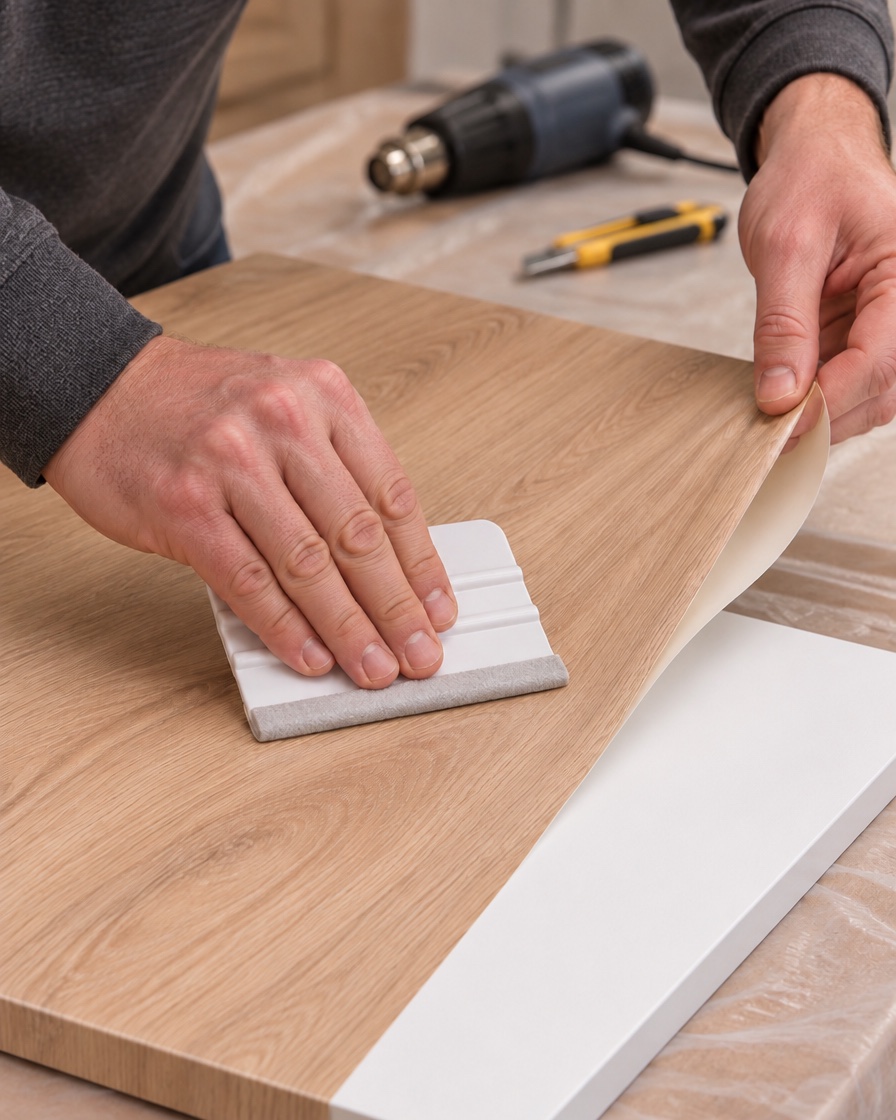
Examples of projects with architectural films.
How it works
The film is applied to a clean, sound surface. We heat it so it follows edges, corners and curves perfectly. Handles and hinges are removed and then refitted.
The result: a seamless surface, with no bubbles or visible joins.
Which surfaces?
Melamine, laminate, wood, MDF, metal and, under conditions, tiles.
The surface must be stable: swollen or peeling furniture must first be repaired or replaced.
The benefits
Fast
Most projects are finished in 1 to 3 days.
Clean
No sanding, no dust, no paint smell.
Savings
You keep your cabinets, appliances and plumbing.
Durable
10-year manufacturer's warranty on the film.
Easy to look after
A damp cloth is enough.
Sustainable
Up to 75% less CO₂ than replacing. Less furniture thrown away.
The material
We only use premium architectural films, made in Europe. They are designed for interiors: resistant to humidity, UV and everyday use.
Finishes for public spaces have a fire rating.
Care
A soft cloth and water, or a pH-neutral cleaner. Avoid abrasive sponges, solvents and neat bleach.
Always put a trivet under a hot pan.
Our collection
Over 500 finishes, in 7 families. Scroll through, then open a family to see its references.


Want to see a finish at your place?
Preview it on a photo of your room, or receive up to 3 samples at home (€6.90 pack including VAT and delivery, deducted from your order within 6 months), to choose in the light of your room.
When wrapping isn't the right solution
We'd rather tell you before than after.
- Your furniture is badly damaged (swollen, peeling, broken). Send us a photo: it can sometimes be saved after repair, case by case.
- You want to change the layout of the room, not just its style.
- The surface is in direct contact with strong heat (right next to an oven or hob without protection).
In those cases, replacing or repairing remains the best option, and we'll explain why.